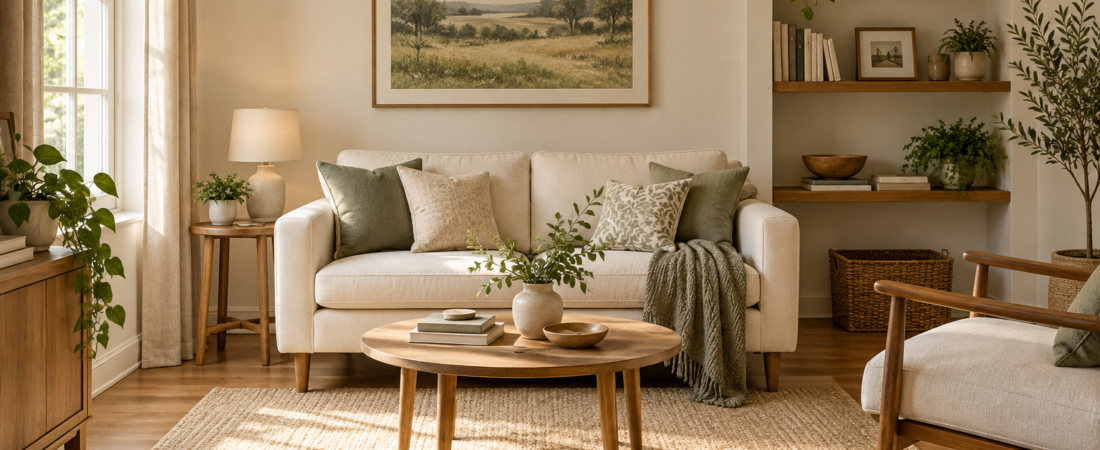
In a small home, one room may need to be a living room, a workspace, and an occasional guest room. The difficulty is usually the transition between those jobs. Work papers remain on the sofa, the guest bedding is difficult to reach, and moving a table becomes a daily nuisance. Plan the room around an easy change of use, not around fitting in every possible piece of furniture.
Rank the room’s jobs honestly
List how the room is used in a typical week and how often each activity happens. The everyday use should guide the main arrangement. A room used for relaxing every evening should not be permanently crowded by equipment needed for guests twice a year.
Separate regular jobs from occasional ones. Keep the essentials for daily activities accessible; store less frequent equipment where it can be retrieved when needed. If two activities happen at the same time, consider whether they can comfortably share the room or need a different arrangement.
Design the transition before buying furniture
Walk through the change from one use to another. Where does the work equipment go? Which pieces move? Where will a guest put a bag? If the transition requires carrying several heavy items through the house, look for a simpler plan.
Time a trial with your current furniture. You may discover that a small side table is easier to move than a large coffee table, or that keeping work supplies in one container solves more than a new desk would. The transition should be realistic on an ordinary tired evening.
Keep a clear path in every arrangement
Check walking routes with the room set up for each job. A layout that works during the day may block a doorway when a sofa bed opens. Include the space needed to use drawers and doors, and keep access to exits and windows appropriate to the room.
Measure the full open dimensions of folding or extending furniture, not just its closed footprint. Follow the manufacturer’s guidance on operation, load limits, and placement. Make sure the mechanism can be used without trapping nearby objects or requiring awkward movement.
Give work a portable boundary
If the room contains a shared table, gather work essentials in one practical tray, tote, or drawer. Keep the laptop, charger, and current project together while storing less frequent supplies elsewhere. Choose a secure place for confidential material.
A small shutdown routine helps: note the next task, close and store equipment appropriately, return papers to their folder, and clear the surface. This supports the room’s evening use without requiring a separate office. Follow device instructions when charging or storing equipment, including ventilation requirements.
Choose flexible pieces by convenience
A storage ottoman, folding table, or movable stool can serve more than one role, but usefulness depends on how easily you can switch roles. If a storage lid is always covered, the space beneath it may not suit everyday items. If a folding table is too awkward to set up, it may remain open permanently.
Before choosing a piece, ask where it goes when it is not needed and who will move it. Test weight, access, and the available storage footprint. More functions do not necessarily mean a better fit for the room.
Prepare a small guest kit
Keep guest essentials together: appropriate clean bedding, towels, and any simple items your visitors usually need. Store fabrics fully dry and follow their care instructions. Label the set so you can retrieve it without searching through several cupboards.
Decide where a guest can place a bag and personal belongings. A cleared shelf or accessible surface is more helpful than a room filled with decorative extras. Consider lighting, privacy, and a practical route to the bathroom. Keep electrical cables away from where someone may walk in an unfamiliar room.
Use light to support different jobs
A room used for several activities may benefit from more than one lighting option. A task light can support reading or work, while a separate room light helps with general movement. Check glare on screens and whether lamps remain stable when furniture moves.
Avoid placing a lamp or cable where it will be caught during the transition. Choose an arrangement you can operate easily without shifting other objects. If curtains or blinds provide privacy, make sure the furniture does not prevent them from closing.
Keep decoration compatible with daily use
A few objects can make a shared room feel welcoming, but surfaces still need to support their jobs. Limit the things you must relocate each time the room changes. Choose the display areas that remain stable rather than covering every practical surface.
Review the room after hosting or a busy workday. What was repeatedly moved? What did you need but could not find? Those details point toward useful improvements. Make one change and test it before committing to a larger rearrangement.
A multipurpose room works when each job has a clear place and the transitions are manageable. Give the everyday use priority, store occasional equipment deliberately, and leave enough flexibility for the room to adapt without a major reset.