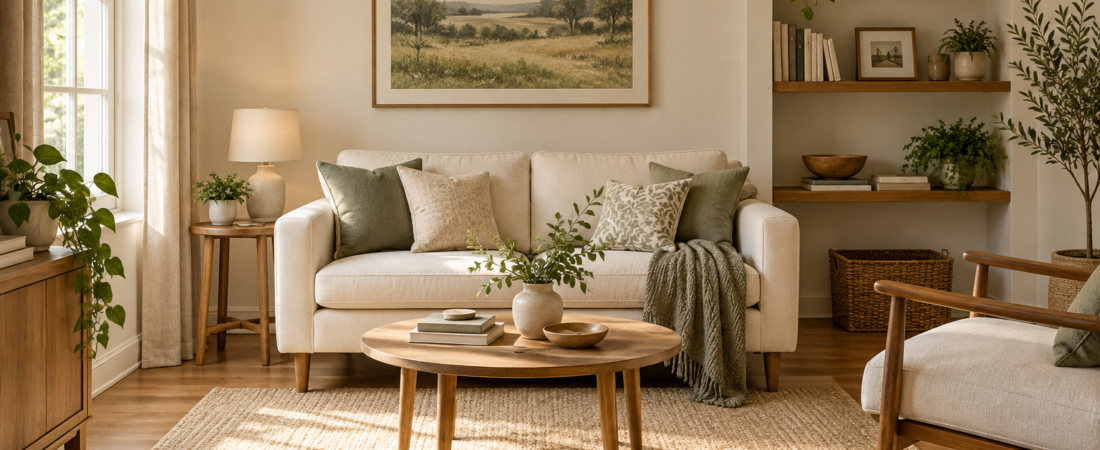
A small living room can feel crowded even when it contains very little. Often the problem is not the square footage: it is that the room is trying to support several jobs without a clear plan. Before shopping for another storage unit, work out how you actually use the space.
Start with the busiest hour of your day
Think about a normal evening. Is someone answering emails while another person watches television? Does the coffee table become a dinner table? Do school bags land on the sofa? Write down the two or three activities that happen most often. These are the jobs your layout should support first.
For one week, notice where you repeatedly move furniture or step around things. A chair that always gets pushed aside may be in the wrong place. A basket that nobody uses may be too far from the point where clutter starts.
Measure the route, not just the furniture
Measure the room, door openings, and the furniture you intend to keep. Mark the route from the entrance to the main seat and any balcony or adjoining room. Leave enough clearance to walk comfortably, open doors, and use drawers. Test the route while carrying a laundry basket; a layout that works only when you turn sideways needs another look.
Painter’s tape can help you test a footprint before moving anything heavy. Mark the outline of a table or cabinet on the floor, then live around it for a day. Check door swings, curtains, outlets, and radiator clearance as well as the main walkway.
Give each surface one primary job
A surface with no agreed purpose tends to collect everything. Decide what belongs on the coffee table: perhaps a lamp, one book, and somewhere to place a drink. Move paperwork to a slim folder near the place where you deal with it. Keep charging cables together beside an accessible outlet rather than across a walkway.
Use a small tray for the objects you want to keep together, but avoid filling every table with trays and baskets. A container helps only when you can name what it holds and put it away easily.
Keep flexible pieces easy to move
A light side table can serve the sofa during the day and a reading chair at night. An ottoman can offer an extra seat, but check that it does not block the room when you pull it forward. Furniture with more than one purpose is useful when both functions are convenient. Storage under a seat is less helpful if you have to clear a pile of cushions every time you open it.
Before replacing a piece, try moving or removing it. Position a chair at a slight angle, place a smaller table beside the sofa instead of in front of it, or swap an oversized lamp from another room. Photograph each option from the doorway so you can compare the whole room rather than one corner.
Choose storage around your actual belongings
Sort the items that need a home before choosing a cabinet. Tall shelves suit books and display items; shallow storage may be better for paperwork. Frequently used things should be within easy reach. Reserve awkward spaces for belongings you genuinely use less often.
Secure tall furniture according to the manufacturer’s instructions and keep heavy items low. Do not sacrifice safe access to windows, heaters, or exits for extra storage.
Try a seven-day reset
Make one layout change and choose one landing place for the clutter that appears every evening. Use the room normally for a week. At the end, ask three questions: Can we move comfortably? Can we find what we use? Is it easy to put the room back together?
If one answer is no, adjust that detail before spending money. A useful small living room is not a room with the fewest possessions. It is a room where the things you keep support the way you live.
Next, explore our home organization guides for simple systems that keep everyday items close to where you use them.