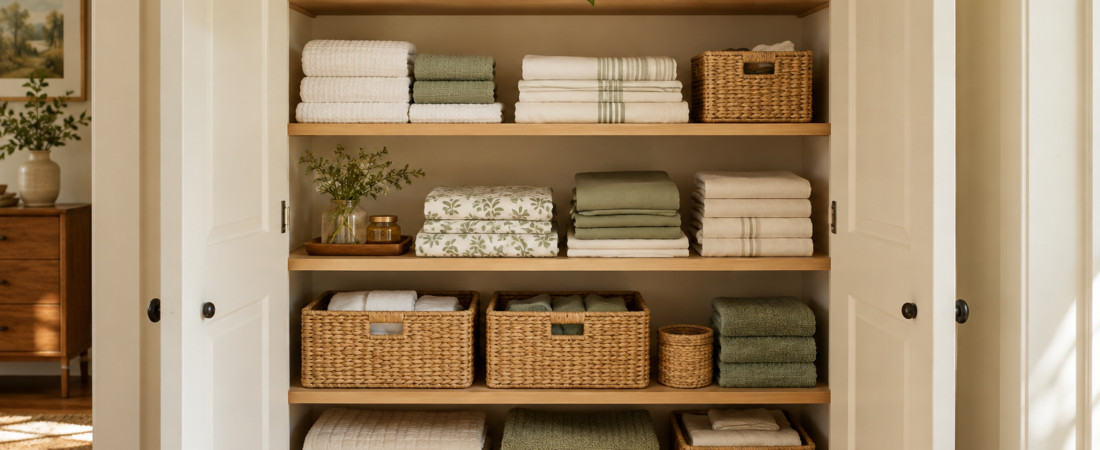
A linen cupboard is often expected to hold more than linen. Spare toiletries, cleaning supplies, gifts, and things without another home gradually take over. Then changing a bed means pulling out several piles just to find a matching pillowcase. A useful reset begins by deciding what this cupboard is responsible for and how much it needs to hold.
Define the cupboard’s main job
List what you need to reach here regularly: towels, bed sheets, pillowcases, guest bedding, or a small supply of bathroom essentials. If unrelated objects are using the most accessible shelves, choose another appropriate home for them. Keep cleaning chemicals separate from fabrics and personal items, with secure storage suited to your household.
Work on one shelf at a time if you cannot finish the whole cupboard in a single session. Clear a clean surface nearby so you can sort without putting fresh bedding on the floor. Leave enough time to return everything before the next household task needs the room.
Count complete sets rather than individual pieces
Group bedding by bed size and assemble the combinations you actually use. A large collection of unmatched pieces may occupy more room than a smaller number of complete sets. Check condition and separate anything that needs repair or has a different intended use.
Choose a quantity that fits your laundry routine and guest needs. There is no universal correct number of sheet sets or towels. A household with frequent guests may need a different reserve from a household that washes and replaces bedding on the same day. Keep a sensible buffer without using the cupboard to store unlimited extras.
Store each set together
A matching sheet set can be kept as one folded group, in a suitable fabric container, or inside one of its pillowcases if that works for you. Use the method that is quickest to maintain. You should be able to remove a set without dismantling the entire shelf.
Keep fabrics clean and fully dry before storage, following their care instructions. Avoid packing so tightly that air cannot circulate or a stack becomes difficult to lift. If the cupboard has a dampness problem, address the cause rather than covering it with scented products.
Give shelves a simple contents rule
Choose one category for each section: everyday towels, bedding for a particular bed size, or guest supplies. Label the shelf edge if more than one person puts laundry away. Plain labels such as “double-bed sheets” are more useful than elaborate names that require explanation.
Put the most-used items at a comfortable height. Reserve harder-to-reach areas for lighter, less frequent belongings. Do not store heavy containers high where you have to lift them awkwardly. Follow the shelf’s load limits and avoid overloading adjustable supports.
Use depth without losing things at the back
Deep shelves can hide a second layer of items behind the first. If that happens, use a container you can pull out easily or group a complete category in one accessible section. A shallow basket can help with small bathroom supplies, but it needs a clear contents rule.
Do not choose containers solely because they fit the shelf. Check whether the front handle is accessible, whether the container can be lifted when full, and whether you can see or identify the contents. A decorative basket that catches on the door frame will soon stop being used.
Create a clear boundary for spares
Decide how much space replacement toiletries and household supplies may occupy. Before shopping, check that section. A visible limit helps prevent repeated purchases of things you already have. Retain product labels and follow storage guidance, particularly where temperature or moisture matters.
Use older suitable supplies before newer ones and check dates and condition. Do not keep an item indefinitely just because it is unopened. If you are unsure whether a product remains appropriate to use, follow the manufacturer’s guidance rather than guessing.
Make laundry return part of the system
When clean laundry comes back, put it directly into its assigned section. If the cupboard has become full, pause before squeezing in another stack. Something may belong elsewhere, or the quantity may need reviewing. A system that requires force every time is not finished.
If someone else regularly returns laundry, show them the arrangement and adjust it if a label or division is unclear. The cupboard should be usable by the household, not depend on one person’s memory of a carefully folded display.
Review after the next bedding change
The next time you change a bed or collect towels, notice whether you find what you need immediately. Check whether the remaining stack stays stable after removing one item. If it collapses, reduce the height or divide the contents into smaller groups.
Keep the reset modest. You do not need identical containers, perfect folds, or a photograph-ready shelf. You need clean, usable linen that is easy to select and return. When the cupboard supports ordinary laundry day, the organization is doing its job.