A small bedroom has to do a surprising amount of work. It holds your bed, clothing, laundry, and the things that begin and end your day. When these jobs compete for the same narrow strip of floor, even a tidy room can feel awkward. Start by making daily movements easier, then decide where storage can help.
Plan around the bed you use
Measure the bed frame as well as the mattress. Include projecting corners, a headboard, and any drawers that open underneath. Then measure the doors, wardrobe openings, and the route from the entrance to the bed. A furniture plan should work with doors and drawers open, not just when everything is closed.
If two people use the bed, consider how each person gets in and out. Pushing it against a wall may gain floor space but make daily access less convenient. Try the arrangement before committing to it. Keep exits and windows accessible and maintain any clearances required around heating equipment.
Sort clothing before choosing storage
Separate what you wear regularly from out-of-season items and clothing you need to repair, donate, or discard. Make those decisions before buying a second wardrobe. A bedroom with more storage can still be difficult to use if every drawer is packed with things you seldom choose.
Group clothing by how you actually get dressed. If work outfits are chosen in a hurry, give them an accessible section. Keep accessories near the clothing they go with, but avoid so many tiny compartments that putting laundry away becomes a chore. Leave enough room to see what is there.
Use awkward spaces for occasional belongings
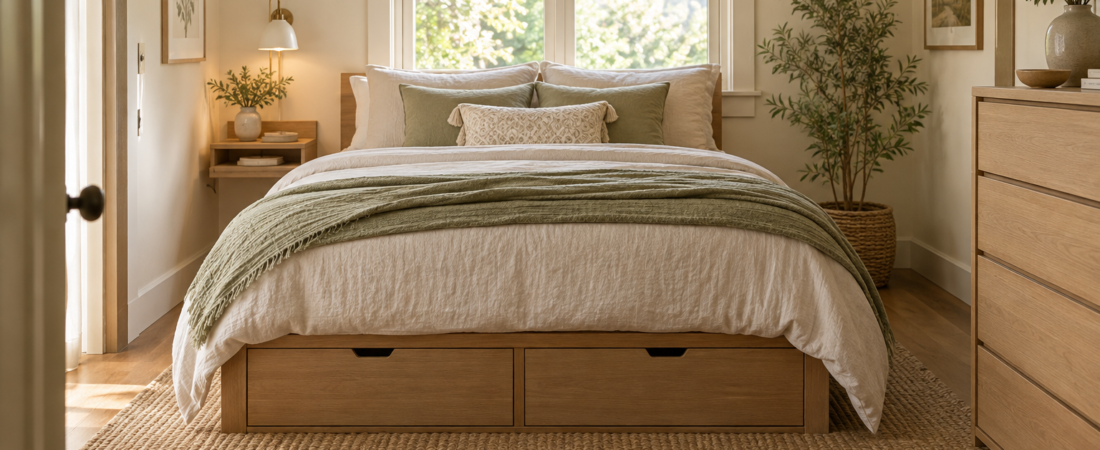
Under-bed storage can suit seasonal bedding or other things you do not need daily. Choose containers that fit the available height and can be removed without a wrestling match. Check ventilation and care requirements for the items stored there. Do not push belongings against equipment or use the space for anything that requires a more secure location.
Keep everyday clothing somewhere you can reach comfortably. If accessing a container requires lifting a mattress or moving the bed, it is not an ideal home for something you use every morning. Hidden storage should make the room easier, not conceal a daily inconvenience.
Give each bedside area a small, clear purpose
Decide what you genuinely need beside the bed: perhaps a lamp, a book, glasses, and a place for a drink. Choose a surface or shelf that accommodates those items without narrowing the walking route unnecessarily. A deep chest is not always better than a smaller table.
Check whether a light switch and charging point can be reached conveniently. Route cables away from places where feet or bedding may catch them. Keep devices and chargers on suitable surfaces and follow their safety instructions. Do not cover charging equipment with bedding or tuck it somewhere that prevents ventilation.
Put laundry where it already lands
If worn clothes consistently appear on one chair, that location is telling you something. A laundry basket nearby may solve the problem. If the clothes are items to wear again, give them a limited, deliberate place such as a suitable hook or a small designated section of the wardrobe.
Keep that temporary area small enough to reset regularly. When every chair becomes storage, the room loses a useful place to sit and the clothing becomes harder to sort. Choose a routine that fits your household rather than expecting everything to go directly into a drawer every time.
Use vertical space carefully
A taller storage piece can reduce the floor area occupied by furniture, but it must be suitable for the room and secured according to its instructions. Keep heavy belongings low, and avoid placing frequently used items where you need to stretch or climb to retrieve them.
Open shelves can be useful for a few objects but are not automatically less cluttered than closed storage. Choose based on what you need to hold. A row of attractive baskets still needs a clear contents rule and enough access to remove each basket.
Test light, privacy, and daily access
Visit the room at the time you normally dress and the time you settle down for the evening. Check whether furniture blocks useful daylight or prevents curtains from closing. Keep a practical light available where you dress or sort clothing, rather than relying on a bright overhead light for every task.
If the bedroom also contains a desk, define what happens to work at the end of the day. A folder, drawer, or portable container can keep papers together and clear the visible surface. The aim is a manageable transition, not an expensive partition.
Make one change and live with it
Move the most troublesome item first. This may be a basket, bedside table, or chest that obstructs a drawer. Use the new arrangement for several days. Ask whether it is easier to get dressed, put laundry away, and move through the room.
Photograph the layout from the doorway before and after making a change. This can help you spot a crowded route that is easy to overlook from inside the room. Keep the changes that improve daily use, even if they are not the most symmetrical option.
A comfortable small bedroom is built around access and habits. When your bed, clothing, and daily essentials each have a sensible place, the room becomes easier to use without needing to hold more furniture.