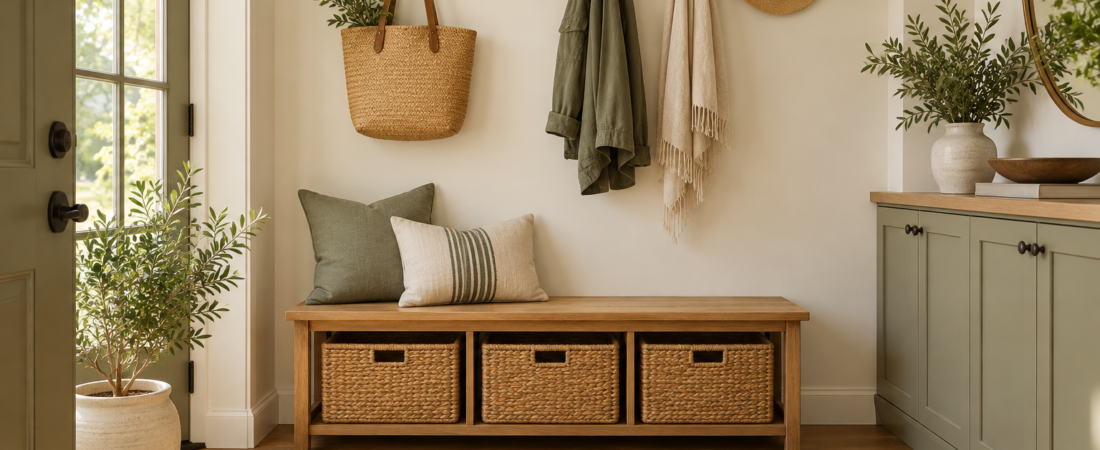
The entryway is where your home meets the outside world. Shoes arrive wet, bags come in full, and the mail rarely waits for a convenient moment. If this small area keeps becoming a pile, the answer is usually a clearer landing system rather than a larger cabinet. Build around the things that arrive every day, the people who bring them in, and the space you need to move safely.
Look at the pile before clearing it
Take a quick inventory of what is there now. Separate daily shoes from occasional shoes, current paperwork from old paperwork, and bags in regular use from bags being stored. Notice whose belongings are hardest to put away. A high hook might suit an adult coat but leave a child’s backpack on the floor. A narrow shoe rack may not accept the boots you actually wear.
Do not buy organizers until you know what needs organizing. Count the shoes you expect to keep beside the door, measure the longest bag, and allow for seasonal changes. An entryway that holds every shoe you own will struggle to function as a place to arrive and leave.
Protect the walking route first
Open the front door fully and walk through while carrying a shopping bag in each hand. Check that you can reach the light switch and move into the next room without stepping over anything. This is the space your storage must respect. Avoid putting a bench or basket inside the door swing, and leave access to heaters, outlets, and any building equipment.
Measure both the available width and the depth of a possible storage piece. A shallow unit can be more useful than a larger cabinet that makes the entrance feel tight. Test a proposed footprint with removable tape before moving furniture. Renters should check their agreement before attaching hooks or shelves to walls.
Give shoes a visible limit
Choose a practical limit for everyday footwear: for example, one or two frequently worn pairs per person if the space allows. Keep the rest elsewhere. The exact number matters less than making the limit obvious. When the rack is full, swap a pair out instead of starting a second pile.
A washable tray can contain wet shoes, but it still needs cleaning and drying. Do not let footwear sit permanently in collected water. Choose a surface that is easy to wipe, and keep it clear of the main walking route. If you use closed shoe storage, consider ventilation and whether tall boots will fit without being crushed.
Put bags where hands naturally reach
A hook is useful only if the bag can be lifted onto it comfortably and the wall fixing is suitable for its weight. Follow the mounting instructions and use fixings appropriate for the wall. Adhesive hooks have limits; a heavy work bag needs a different solution.
Where wall mounting is not practical, a shelf or a designated section of a sturdy bench may work. Give each person one easy-to-reach place. Keep sports bags or school supplies together with the bag they belong to, rather than scattering them across several attractive containers.
Separate incoming mail from actions
Mail needs a decision, not just a basket. Set up one small incoming tray and a second place for paperwork that genuinely needs action. Recycle unwanted non-sensitive material when it arrives and handle sensitive paperwork using an appropriate disposal method. Avoid leaving addresses or account details exposed where visitors can see them.
Choose a regular time to review the action folder. A ten-minute weekly appointment is more useful than a large decorative box nobody opens. If a document belongs with household records, move it there after dealing with it. The entryway should not become your permanent filing cabinet.
Make leaving easier as well as arriving
Place the things you regularly forget close to the exit, provided they can be stored safely. A small dish may suit keys; a pouch may hold a transit pass and reusable shopping bag. Keep valuable items out of view from windows and the doorway. Spare keys and important documents should have a more secure home.
An outgoing spot is helpful for library books, returns, or anything that needs to leave with you. Label it simply and keep it small. If it becomes general storage, it will stop acting as a reminder.
Use a two-minute evening reset
At the end of the day, return everyday shoes to their assigned places, empty the incoming tray, and remove anything that belongs in another room. Invite everyone to put away their own belongings using the same simple rule. You should not need to reorganize the whole entrance each night.
After a week, look for the repeat offenders. If a bag still lands on the floor, move its hook. If shoes spill over, reduce the number stored here or adjust the rack. Treat those patterns as useful feedback rather than a failure to be tidy.
A quick setup checklist
- Keep the door swing and main walking route clear.
- Set a visible limit for everyday shoes.
- Give each regular bag an accessible home.
- Separate incoming mail from paperwork needing action.
- Choose one small outgoing spot and reset it daily.
A successful entryway does not have to look empty. It needs to help you arrive, find what you need, and leave without searching. Start with the most persistent pile, give it a sensible home, and improve the next part only after the first change is working.